For the love of history and the beauty of the region
He spent almost four years working in a Pauline monastery, despite having a wife and two children. All of it in his spare time. “After work, without taking anything away from my family, and all for future generations,” Michał Sitek emphasises. He used every spare moment to digitise — to create a photographic record of — the historical collections at Jasna Góra.
Michał Sitek combines his love for Our Lady of Częstochowa with a passion for his home city and photography. In every spare moment, he records the history and beauty of the region.
A native of Częstochowa, he is passionate about his city. An entrepreneur and an active contributor to the public good, he graduated from a technical university, but Polish history has always interested him. His work preserves both the city itself and its greatest treasure — the monastery of Jasna Góra. He takes an unconventional approach to presenting the city, seeking to do full justice to the beauty of the Kraków–Częstochowa Upland. “Many of the things I do for the city, I do out of passion, without expecting anything in return,” he stresses.
Albums and collections
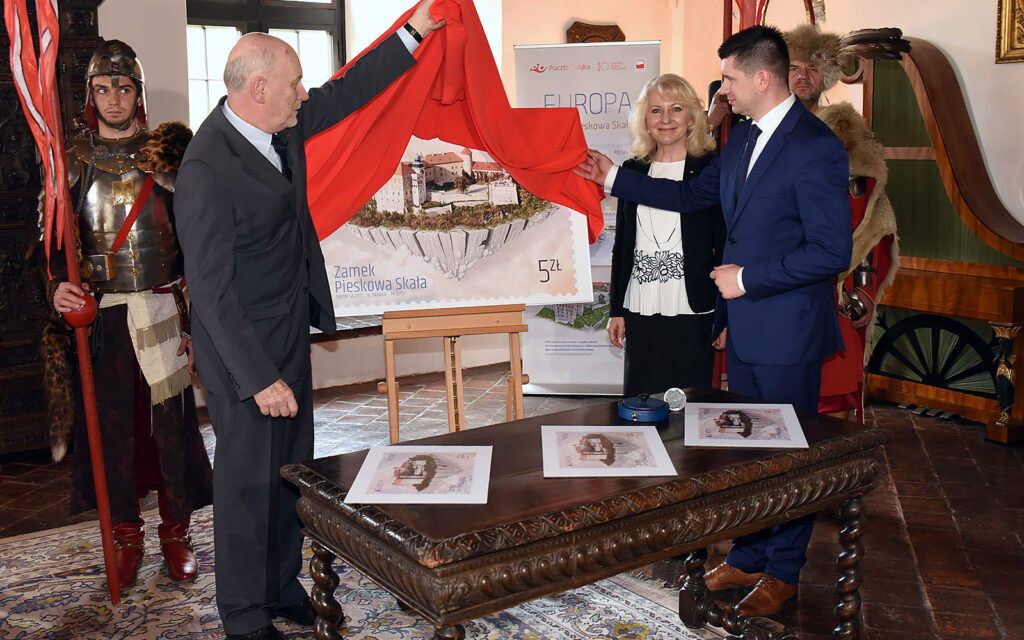
Michał Sitek created www.staraczestochowa.pl, a website devoted to the city’s history — a compact historical compendium of Częstochowa. Collecting is another of his passions. He gathers valuable objects of historical interest and shares photographs and descriptions with everyone who cares about the history of the city and Jasna Góra. Years ago, when he began collecting memorabilia associated with Częstochowa and Jasna Góra, he could not have imagined that he would become the owner of one of the largest collections on the subject. Nor could he have foreseen that, years later, he himself and his photographs would become the main subjects of stamps and postcards associated with the region.
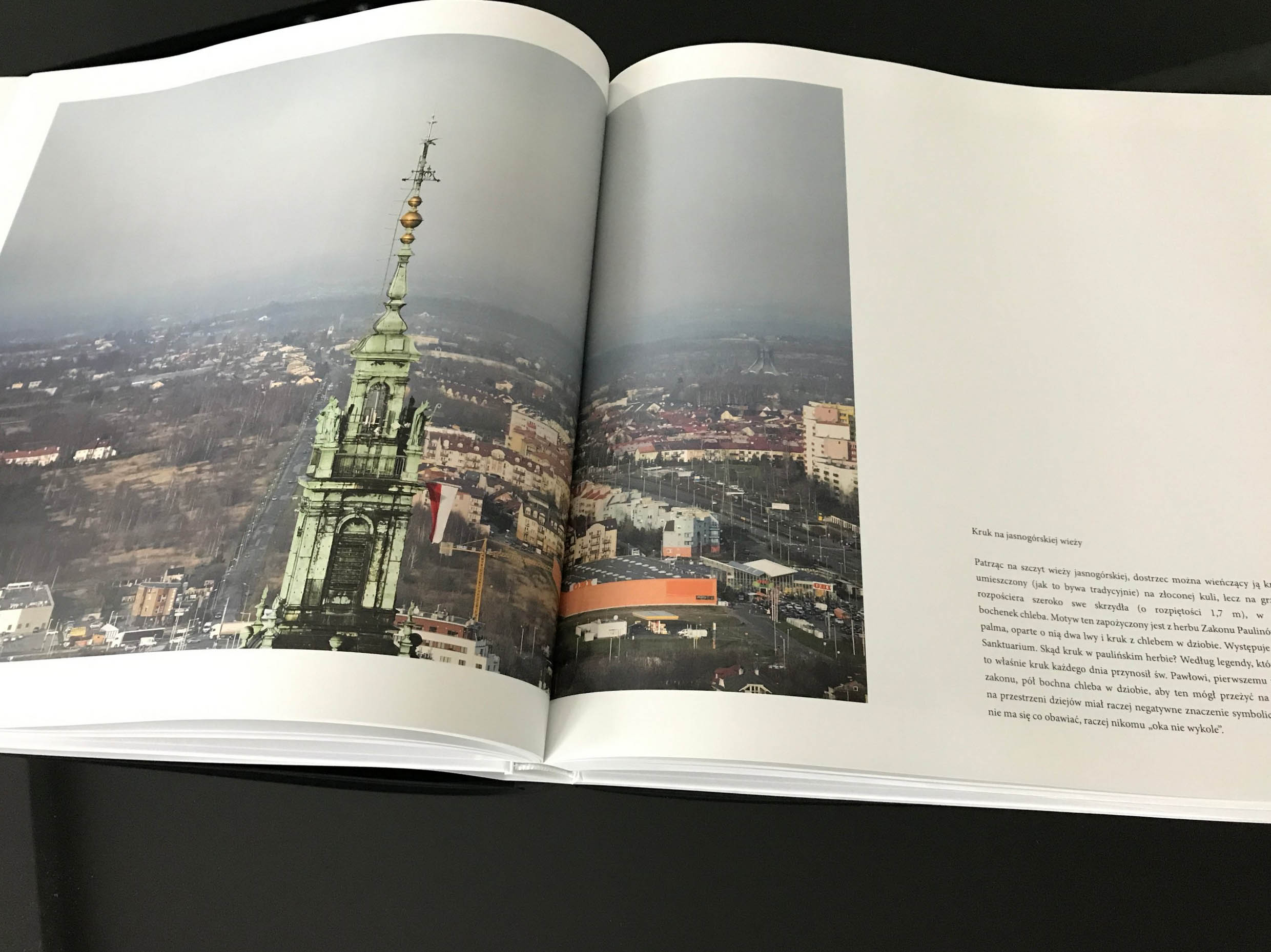
The first volume of Michał Sitek’s own photographic album, Częstochowa from a Bird’s-Eye View, has recently been published. It contains 300 large-format pages of photographs of the city. With his camera, the author spent many hours in the air, flying with Janusz Darocha, an outstanding Częstochowa native and multiple world flying champion. The album is the result of those aerial journeys.
“During hundreds of hours spent among the clouds, with countless clicks of the shutter, through turbulence and difficulties, I took thousands of photographs of my beloved city,” says Michał Sitek. “Seen from the clouds and photographed from high above, Częstochowa takes on an entirely different appearance from the one we see while walking through it,” he adds.
Częstochowa from a Bird’s-Eye View invites us to look at the city in an extraordinary way — from the sky. “From this unusual perspective, we can see a city that is home to hundreds of thousands of residents and, at the same time, a city of pilgrims and tourists who come in great numbers to visit Poland’s spiritual capital. I thank Michał for this remarkable journey, for a special adventure shared by everyone who picks up this album and looks at its photographs,” writes Father Marian Waligóra, Prior of Jasna Góra, in his foreword to the album.
Even before the album went to print, two of its photographs received special recognition. The Paulinianum publishing house used one for a postcard presented to Pope Francis during his visit to Poland. Poczta Polska selected the other for a commemorative EUROPA postage stamp, issued in May 2017 as part of the philatelic competition. The stamp is unusual in carrying the photographer’s signature — something rarely seen. Michał Sitek’s plans include the albums Castles and Strongholds from a Bird’s-Eye View and Jasna Góra and Sacred Sites from a Bird’s-Eye View.
For future generations
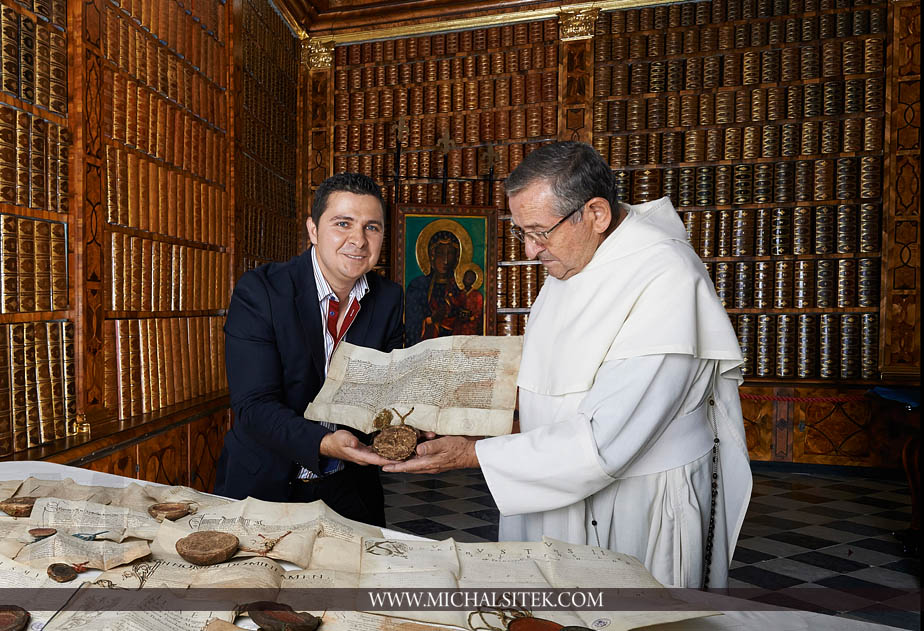
For several years, Michał Sitek devoted every spare moment to digitising the historical collections at Jasna Góra. In an age of digitisation, creating a digital archive is a natural responsibility. It preserves not only the beauty of the objects but also the knowledge they contain. Jasna Góra has had many outstanding archivists throughout its history. They include Father Bernard Oborski, Father Jan Nepomucen Fijałek and, of course, the remarkable Zofia Rozanow, who studied the parchment and paper charters held in the monastery’s archives and, above all, their accompanying seals. It was Zofia Rozanow who first brought Michał to the monastery.
Michał Sitek recalls: “Zofia Rozanow and I were brought together by our love of history and the city of Częstochowa. It began with something small. She asked whether I could help her digitise some documents — royal documents, wax seals, embossed seals and papal bulls. I agreed.” That shared passion developed into a friendship which led to Sitek’s work at the monastery.
While digitising the historical collections at Jasna Góra, Michał met Father Melchior Królik, custodian of the main archives of the Pauline Order. They, too, became friends. Since 1979, Father Melchior has been directly responsible for the conservation of the Miraculous Image of Our Lady of Częstochowa. “Father Melchior showed me many volumes, including the Books of Miracles, which are extraordinarily important to historians and archivists alike,” my interviewee explains.
Driven by passion
Michał Sitek is a man of passion — that is how Father Królik describes him when speaking about their work together.
“What surprised me about him at the very beginning was that, as a young, busy and successful man, he found the time and the willingness to visit the home of Our Lady and Queen of Jasna Góra. Sadly, that is not an everyday sight in these fast-moving and difficult times. Over the years we have known each other, we have spent many hours together archiving the documentation of Jasna Góra and getting to know each other better. Today, with our joint project completed and the digitisation finished, I am happy that future generations of our fellow countrymen can feel reassured about the survival of our national heritage. Michał’s passion for photography and — even more precious in my view — his love for Częstochowa show that there are still people willing to give a great deal for others.”
A dream fulfilled
“Thanks to meeting Zofia Rozanow and Father Melchior Królik, I was able to fulfil my dream: to bring my passion to bear on collections of enormous importance. Not everyone has that privilege. It was also possible thanks to the priors at the time, Father Roman Majewski and Father Łukasz Buzun, and to the support of the current prior, Father Marian Waligóra. To me, this work is an expression of Providence; in everyday terms, it is the icing on the cake. I am happy that I was able to touch these documents and work with them. It is an experience beyond description,” Michał says.
The photographic documentation of royal seals, parchment and paper charters, and papal bulls will be made available in the next volume of the annual Studia Claromontana, prepared under the supervision of Father Professor Janusz Zbudniewek and Professor Marek Adamczewski. The remaining digitised works will be handed over to the Superior General of the Order.
The richness of the collections
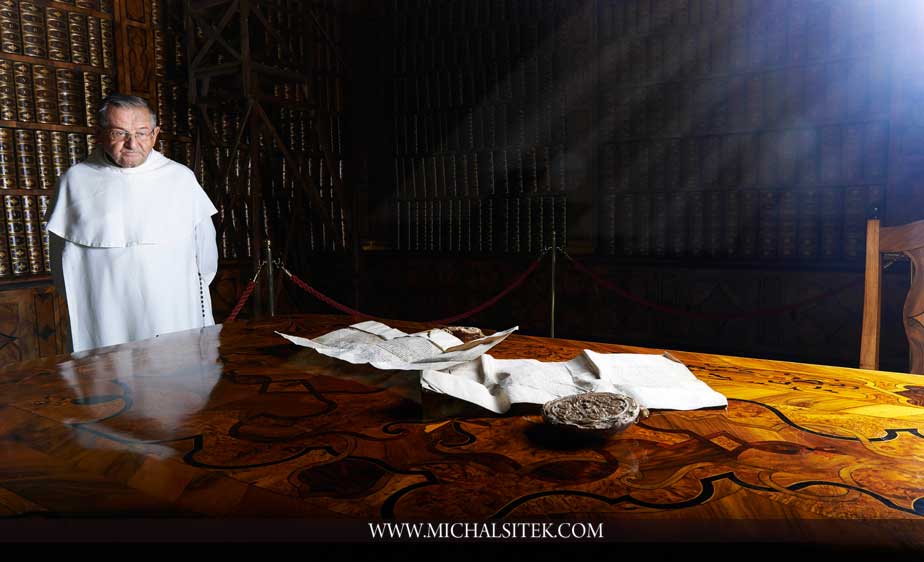
To convey the scale of the historical collections at Jasna Góra, it is enough to say that they occupy five rooms, including four storerooms, and 113 linear metres of shelving holding 7,000 documents of various kinds. Given the richness of this collection, its importance to Polish history and the fact that some of its works are around 700 years old, a substantial proportion can no longer be made available for public inspection. Worse still, they face the risk of damage and deterioration over the centuries to come.
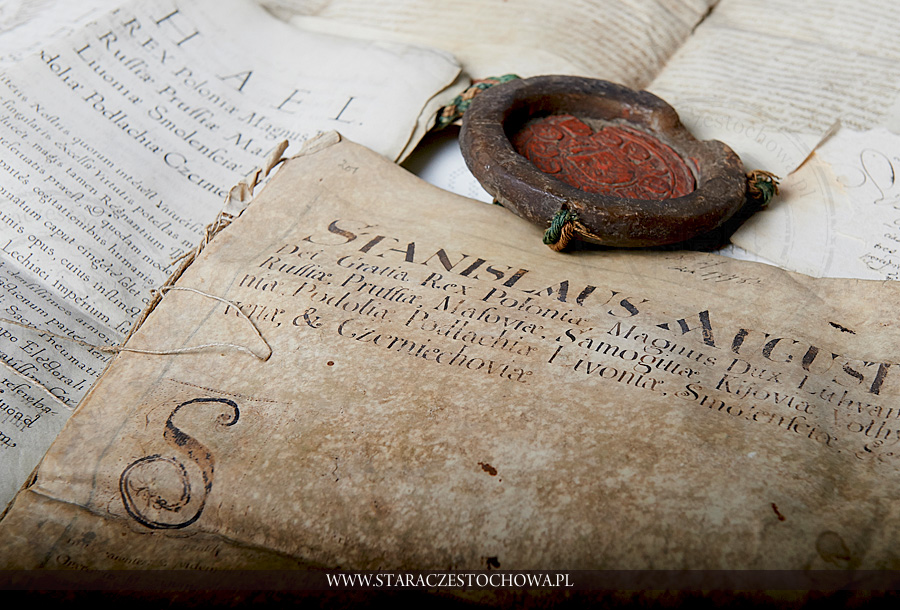
“It is difficult, painstaking work, but I consider it an honour. Digitisation is very important, because documents of such significance cannot readily be moved. I decided that the collections needed to be digitised professionally, so that other people and historians could consult them without taking the originals out of the archive. This also makes it possible to examine the documents in high resolution,” Sitek emphasises.
The Pauline Fathers, together with those who work at and support Jasna Góra, continually protect historical manuscripts and charters from external factors that directly affect their condition.
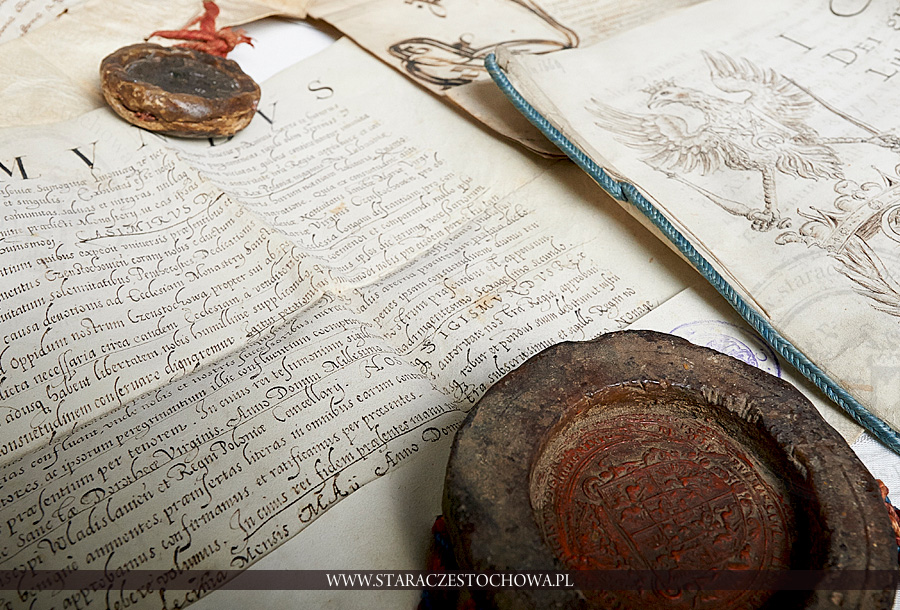
“We must not forget the monastery’s extraordinary influence on the history of our country. Jasna Góra preserves many hugely important historical objects, created hundreds of years ago and of priceless value — not only to the monastery or the city, but also to the history of Poland and Europe as a whole,” Michał Sitek explains.
Among the oldest digitised documents in the Jasna Góra archives, and those of greatest value to historians, Michał Sitek names a charter issued by King Casimir the Great in Krzepice on 24 August 1356. It granted Leonard and Casimir, who were also the hereditary lords of Częstochowa, the right to establish two villages under German law. He also mentions archival materials providing a distinctive body of knowledge and historical sources for the period beginning in 1382. Alongside records closely associated with the monastery, these are organised into collections covering the library, confraternities, fortress, inventories, chronicles, devotions and ceremonies, chapel, and Our Lady and her veneration. There are also materials with virtually no connection to Jasna Góra, known as extranea.
The library manuscripts date from the fifteenth, sixteenth and seventeenth centuries. They include a breviary, the Books of Miracles and Wonders, the Book of the Confraternity of the Holy Guardian Angels, a missal and a Bible — richly illuminated and decorated. Perhaps the most impressive, however, is the Codex Cathenatus, a sixteenth-century manuscript containing the Rule of Saint Augustine, bound in oak boards and fitted with a chain.
Anna Przewoźnik
Original publication
The cover and three pages of the original Polish-language feature are reproduced below. Select a thumbnail to view the full-resolution scan, or download the supplied five-page PDF extract, which also includes the issue’s contents page.
Download original publication (PDF)Source: Niedziela, issue 51, 17 December 2017, pp. 18–20. Original title: Z miłości do historii i piękna regionu, in the cover theme Tajemnice Jasnej Góry. Text: Anna Przewoźnik. Photography and archival material: Michał Sitek / www.staraczestochowa.pl. English translation of the original Polish article. References to family, roles and future plans reflect the time of publication.