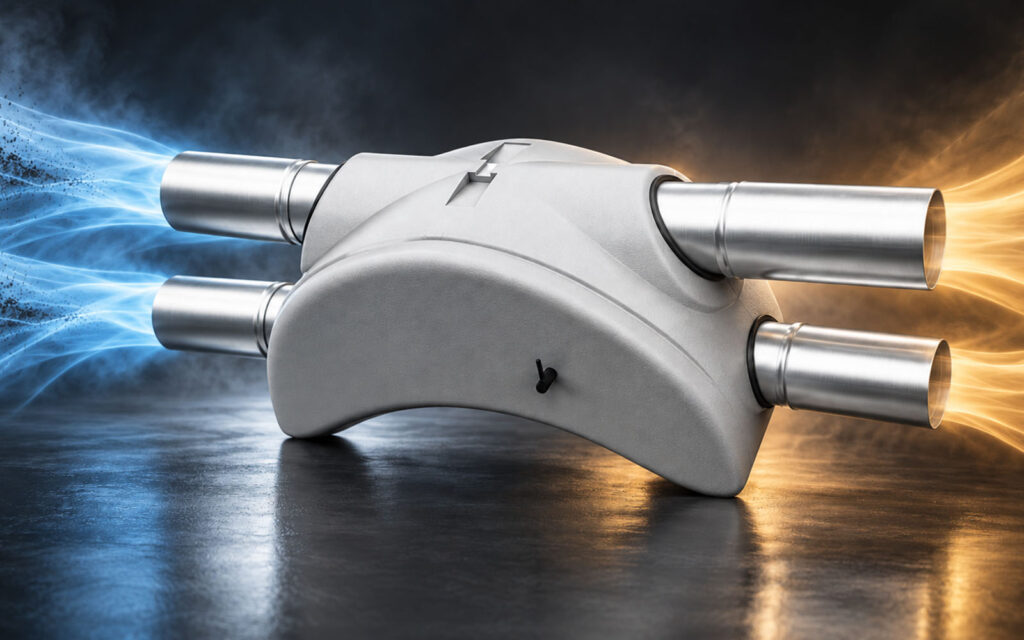
Comfort requires controlled air
Modern, energy-efficient buildings are increasingly airtight. This improves thermal performance, but it also makes properly designed ventilation essential. Fresh air must enter in a controlled manner, while humidity, carbon dioxide, odours and airborne pollutants must be removed before they begin to affect comfort, health or the building itself.
Ventilation is not simply a matter of opening a window. Its purpose is to provide a continuous and predictable exchange of air throughout the rooms in which people live and work. A well-designed system operates independently of changing weather conditions, limits unnecessary heat loss and prevents the accumulation of moisture that can lead to condensation and mould.

Good ventilation should be almost imperceptible. We should notice the fresh air and stable indoor conditions, not draughts, noise or the equipment itself. The system must be selected for the building, balanced correctly and designed as a complete installation rather than as a collection of separate products.
Michał Sitek — DOSPEL General Manager
Why ventilation is necessary
Everyday activities introduce moisture and pollutants into a building. Cooking, washing, bathing, drying clothes and even breathing increase indoor humidity. Furniture, finishing materials and household chemicals may release additional compounds, while occupants continuously produce carbon dioxide. Without effective air exchange, rooms quickly become stuffy and uncomfortable.
Excessive humidity is particularly dangerous because it condenses on the coldest surfaces. Persistent moisture can damage finishes, encourage mould growth and adversely affect both the structure of the building and the health of its occupants. Ventilation removes this moisture at its source and replaces polluted indoor air with clean outdoor air.
Natural, or gravity-based, ventilation depends on temperature differences, wind and the condition of the ventilation shafts. It may work intensively in winter but become weak or even stop during warm, windless weather. Modern airtight windows further restrict the uncontrolled inflow of outdoor air. Mechanical ventilation solves this problem by creating a deliberate, measurable airflow regardless of the season.
How to choose the right fan
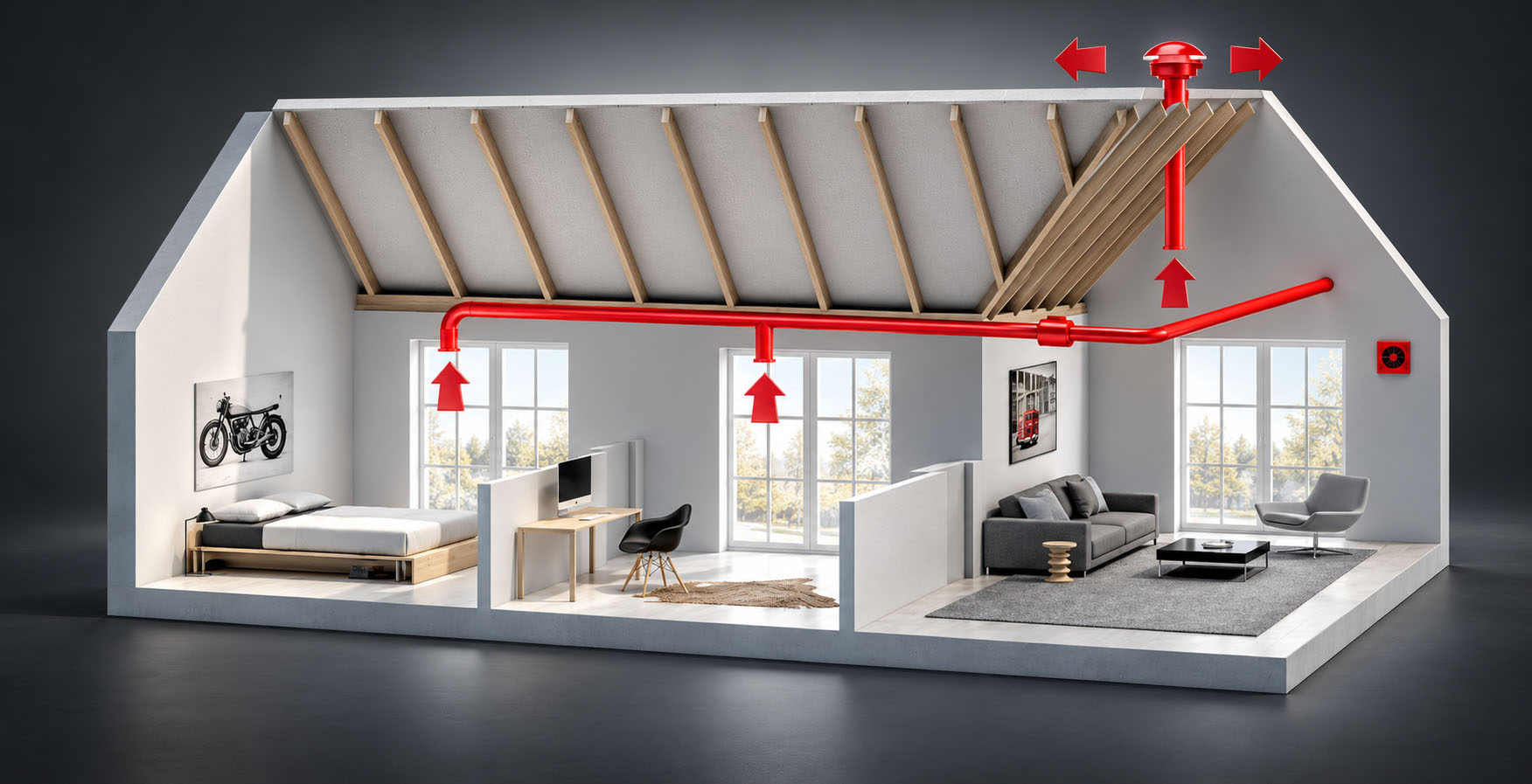
A domestic fan should be selected for the room in which it will operate and for the resistance of the connected duct. The most important parameter is airflow capacity, expressed in cubic metres per hour. It must be sufficient to replace the required volume of air without forcing the fan to operate continuously at its limit.
Before choosing a model, the volume and purpose of the room should be established. A small toilet requires a different airflow rate from a large bathroom, kitchen or utility room. The length and diameter of the duct, the number of bends, the presence of an external grille and the height of the ventilation shaft all influence the actual performance of the fan.
Noise is another important consideration. A fan installed close to a bedroom or living area should combine adequate pressure and airflow with a low declared sound level. Energy consumption, ease of cleaning and access for maintenance should also be checked before purchase.
Equipment installed in a bathroom must be suitable for humid conditions and mounted in the correct electrical protection zone. Depending on the application, useful control options may include a timer, delayed switch-off, a humidity sensor, a motion sensor or automatic speed adjustment. A non-return shutter prevents cold air, draughts and odours from flowing back into the room when the fan is not operating.
- match airflow capacity to the room and the required air-change rate;
- allow for duct length, diameter, bends and pressure resistance;
- check the acoustic parameters and energy consumption;
- select the correct degree of protection for the installation location;
- provide safe access for cleaning, inspection and servicing.
Correct installation determines performance
Even a well-selected fan will not perform correctly if it is installed in a poorly designed opening or connected to unsuitable ductwork. The mounting surface should be stable, the duct should have the correct diameter and the electrical connection must comply with the manufacturer’s instructions and applicable safety requirements.
Reducing the duct diameter immediately behind the fan, using unnecessarily long flexible connections or introducing sharp bends increases resistance and noise while reducing airflow. The fan should be positioned so that it can be removed without damaging the wall finish and so that its grille and impeller can be cleaned regularly.
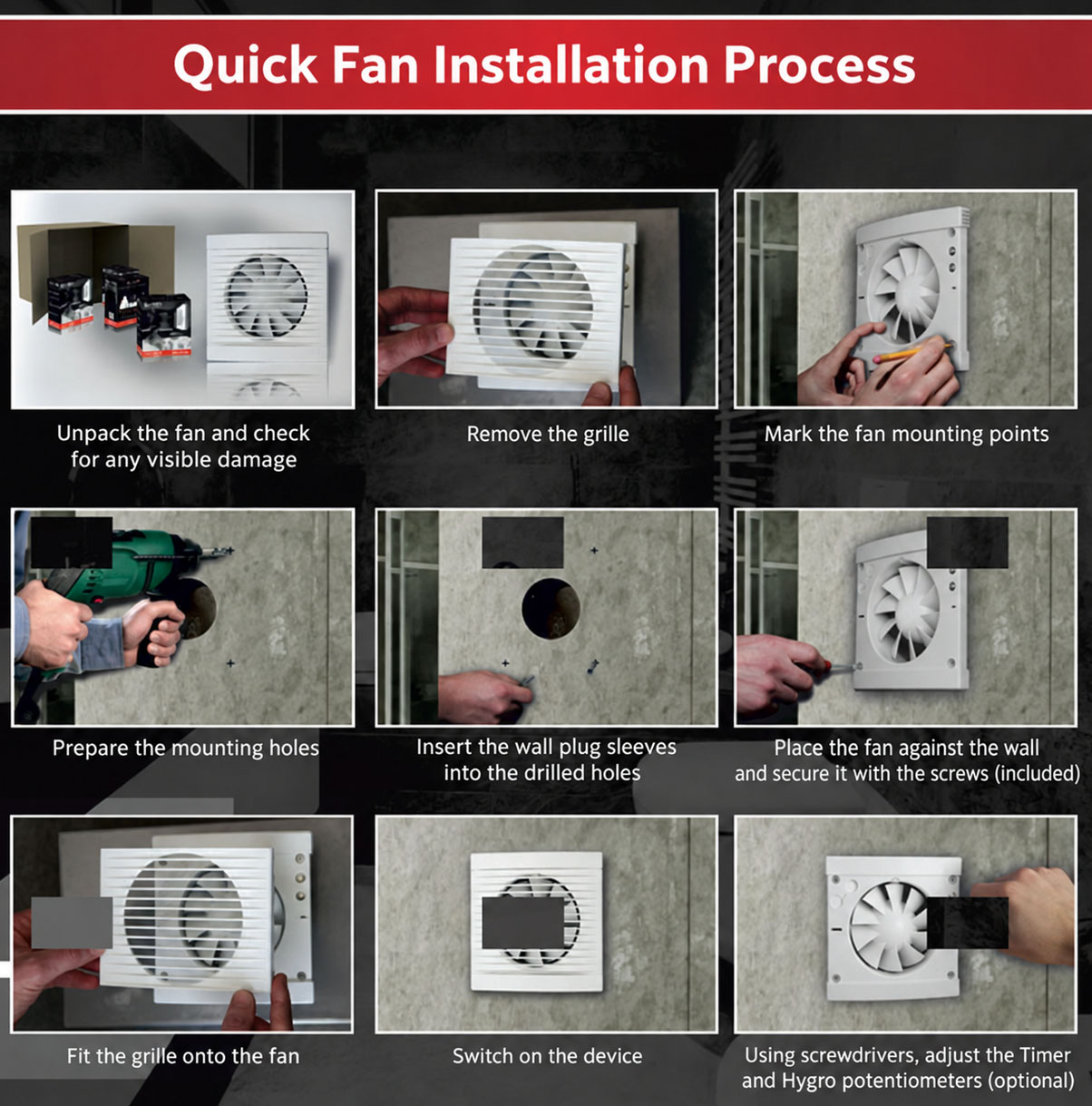
Electrical work should be carried out by a qualified installer. This is especially important where a fan is connected to lighting, fitted with electronic controls or mounted in a bathroom. Correct installation protects users, preserves the manufacturer’s declared performance and prevents avoidable vibration and operating noise.
Central mechanical ventilation
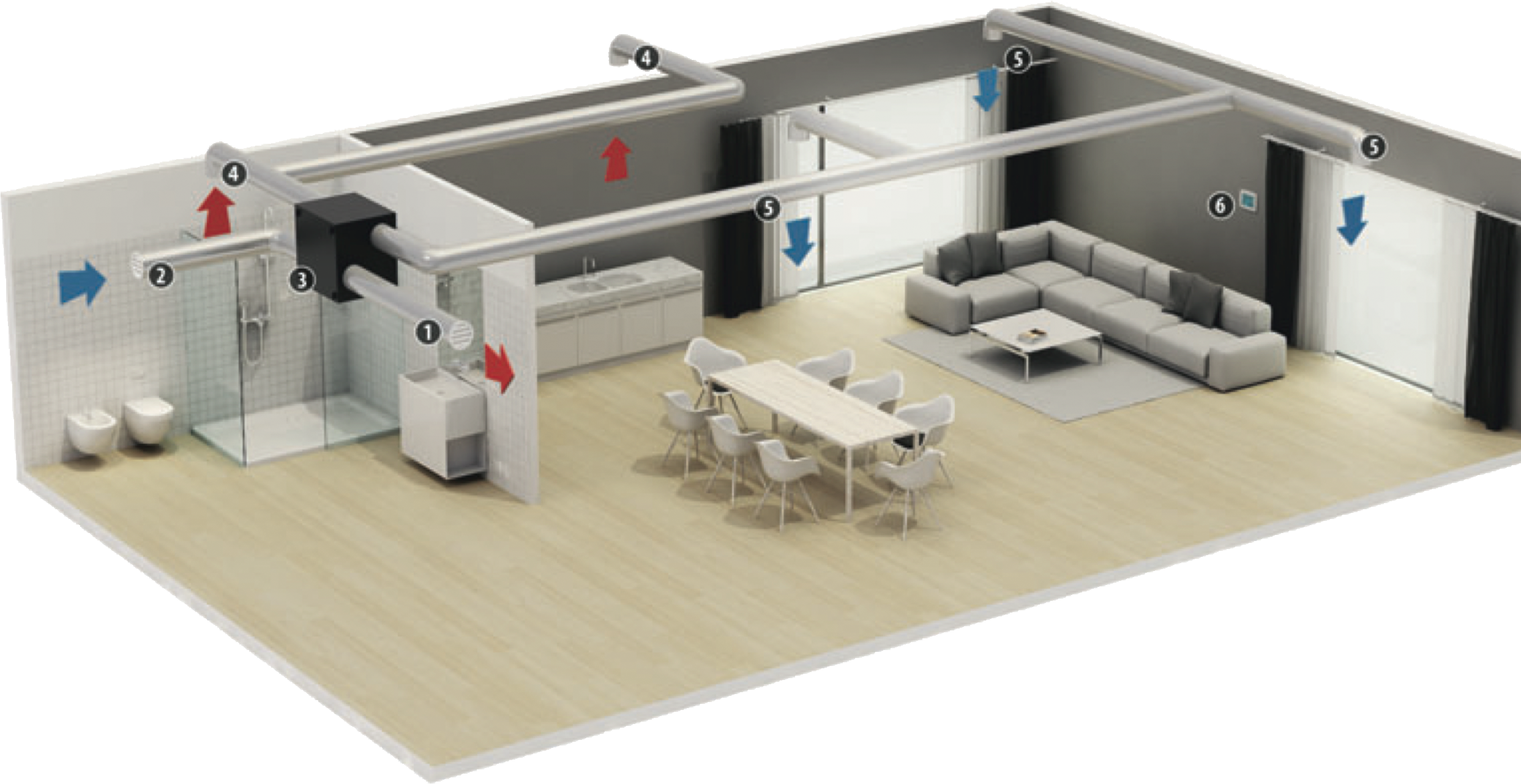
A central ventilation system operates continuously and serves the entire building. The air-handling unit is usually installed in a utility room, boiler room or attic, away from rooms used for rest. Extract terminals remove air from kitchens, bathrooms, toilets and utility areas, while supply terminals deliver fresh air to living rooms, bedrooms and studies.
The duct network should be designed at the same time as the building services. Air velocities must remain within the intended range and every terminal must receive the calculated airflow. After installation, the system should be measured and balanced. Without this final adjustment, some rooms may be over-ventilated while others receive too little fresh air.
Acoustic comfort requires more than a quiet air-handling unit. Ducts must be selected correctly, mechanically isolated where necessary and fitted with appropriate silencers. Thermal insulation protects against condensation and limits unwanted heat exchange. Filters should remain accessible because regular replacement is essential for hygiene, performance and low energy consumption.
What is heat recovery and why is it worthwhile?
Heat recovery makes it possible to retain much of the energy that would otherwise leave the building with the extracted air. Inside the heat exchanger, warm exhaust air transfers energy to the incoming outdoor air. The two air streams remain separated and do not mix.
In winter, fresh air can therefore enter the rooms already preheated, reducing the amount of energy required from the heating system. In summer, when the indoor air is cooler than the outdoor air, the same exchanger can help limit unwanted heat gains. A summer bypass allows cool night air to enter without passing through the heat-recovery process when conditions make this advantageous.
The benefits are not limited to energy savings. Controlled supply and extract airflow improves comfort, reduces uncontrolled draughts and allows outdoor air to be filtered before it reaches occupied rooms. This is particularly valuable in urban areas and for people sensitive to dust and pollen.
A system that must be considered as a whole
The performance of heat recovery depends on the efficiency of the heat exchanger, the electrical consumption of the fans, the quality of the ductwork and the way the installation is commissioned and maintained. A high efficiency figure quoted for an individual component does not by itself guarantee low operating costs for the complete system.
The building must also be prepared for mechanical ventilation. Airtight construction, correctly positioned supply and extract points, space for ducts, condensate drainage and access to the air-handling unit should be resolved at the design stage. Decisions made early are less expensive and produce a cleaner, quieter and more reliable installation.
Filters require systematic inspection and replacement, while the air-handling unit, terminals and ducts should remain accessible for servicing. A properly selected and maintained system provides a stable indoor climate throughout the year, reduces ventilation heat losses and gives occupants control over something that traditional gravity ventilation leaves largely to the weather.
Original publication
The four pages of the original Polish-language article are reproduced below. Select any thumbnail to open a high-resolution version suitable for reading.
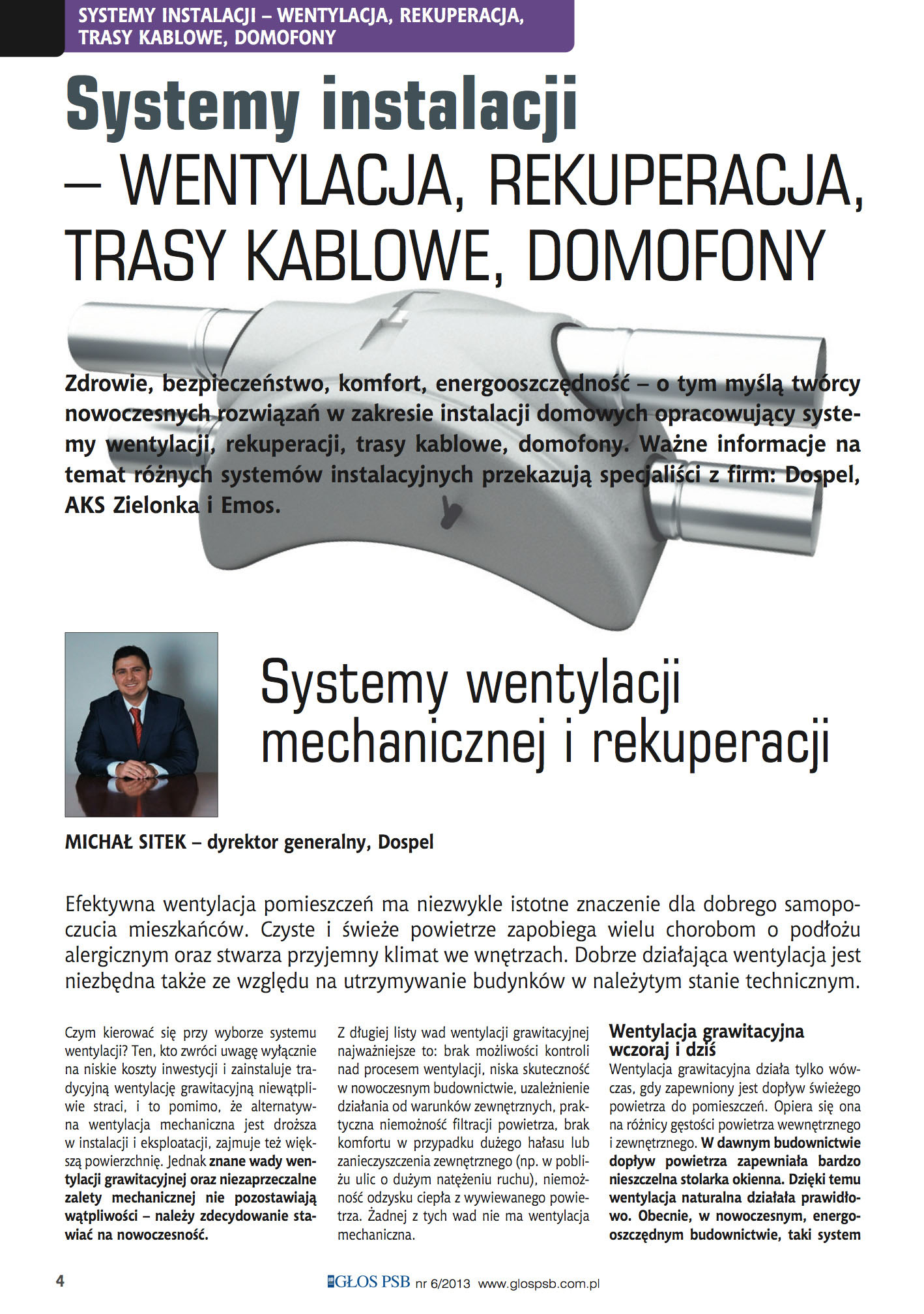
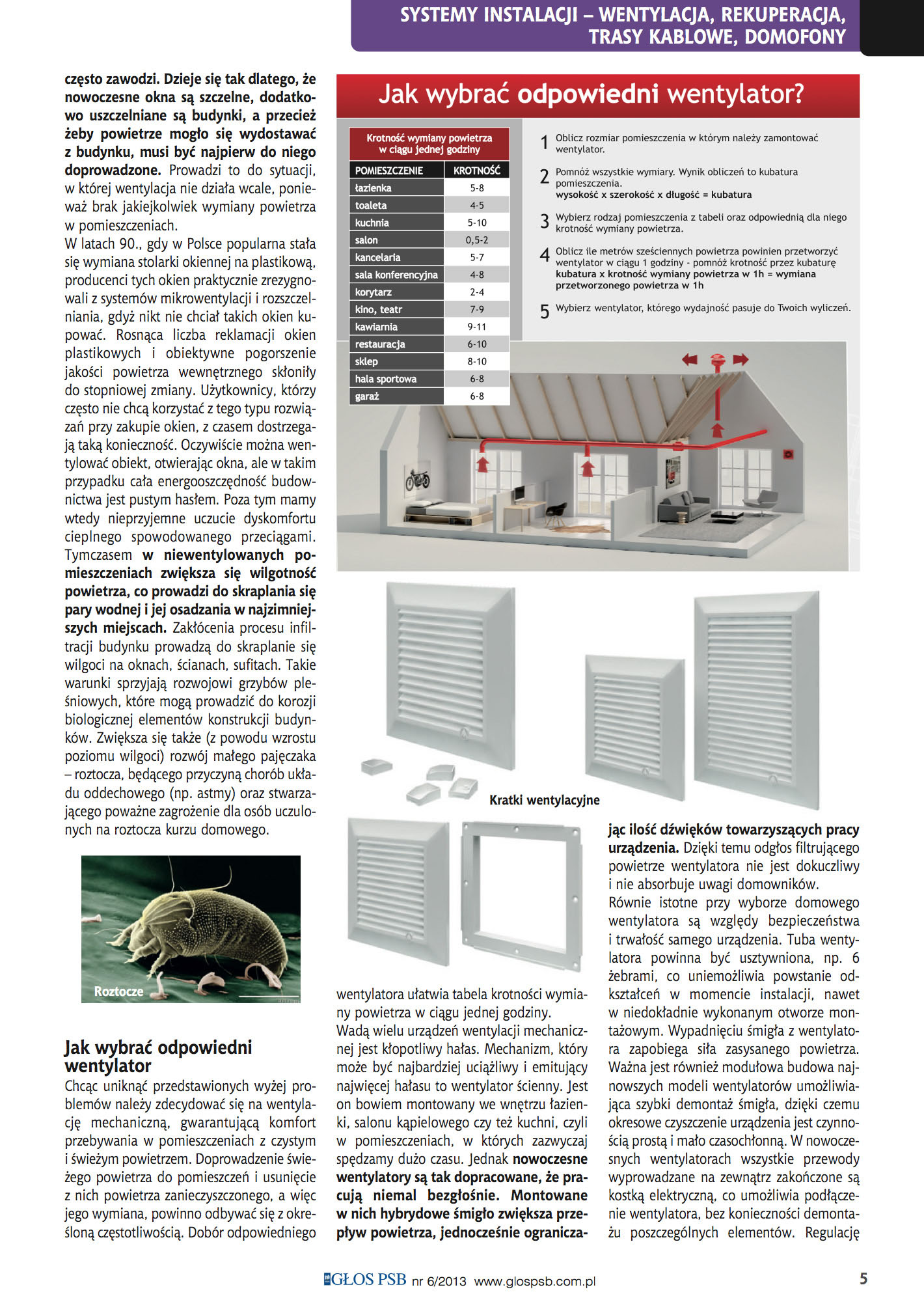
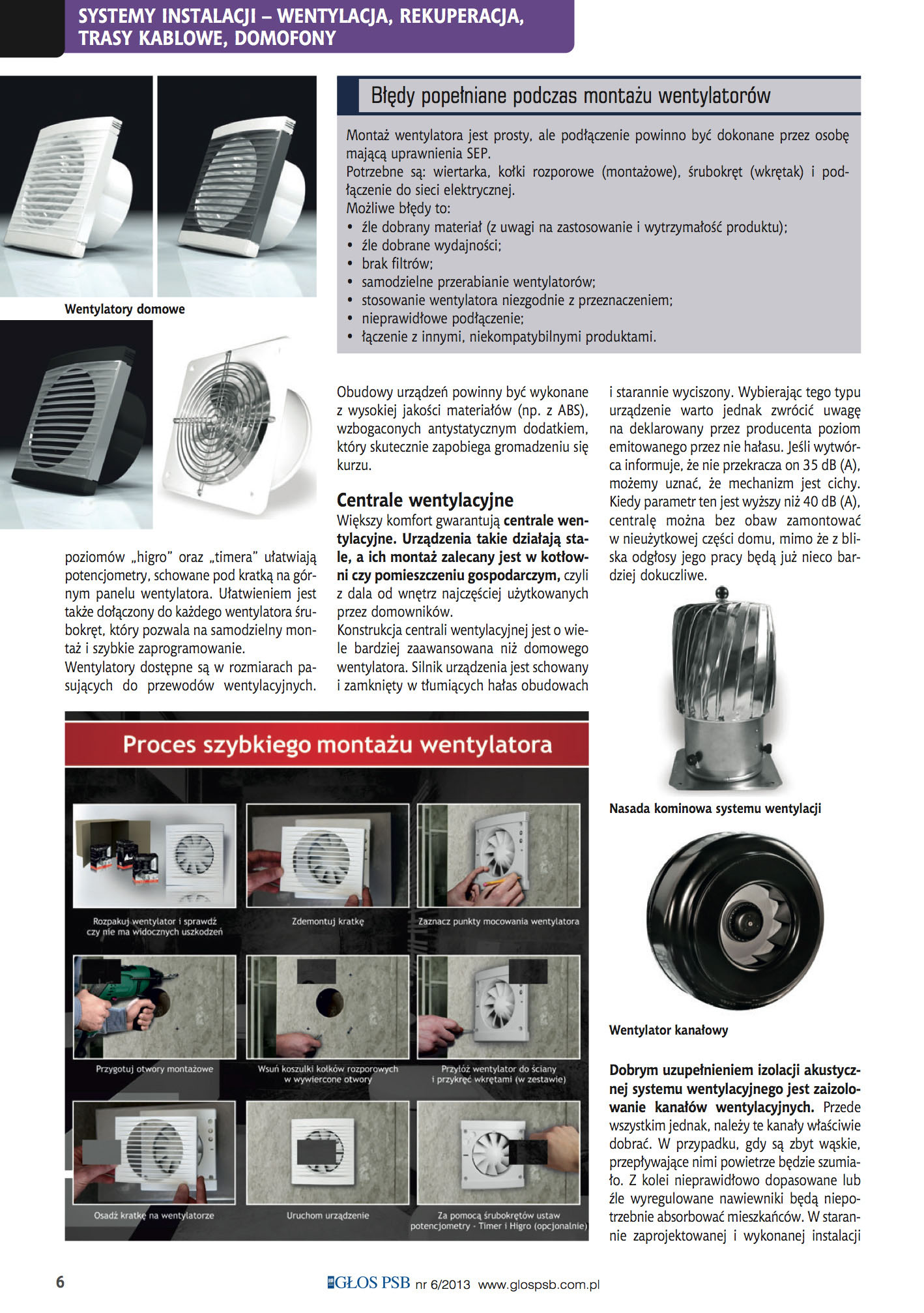
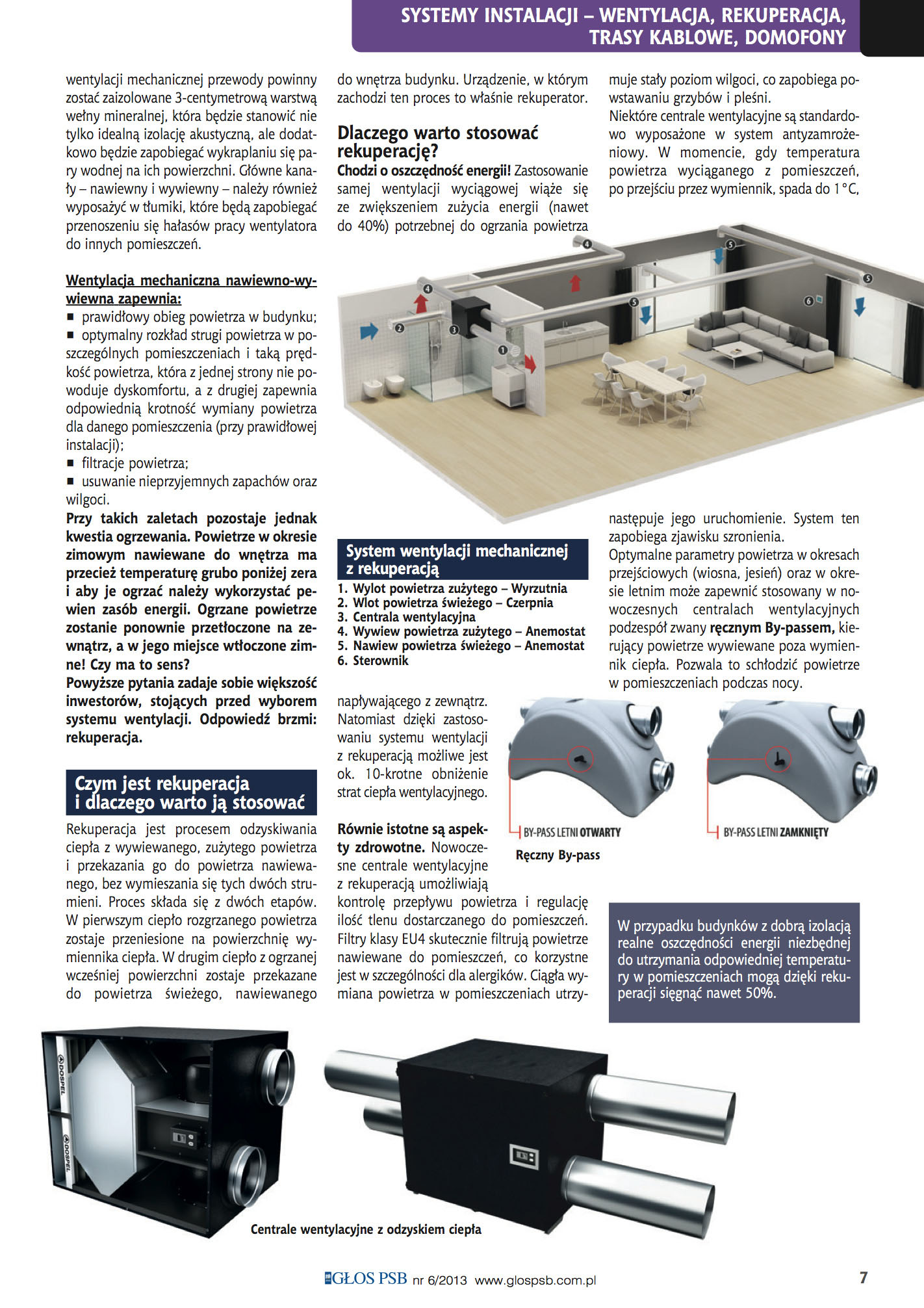
Source: Głos PSB. Commentary and expert contribution by Michał Sitek, DOSPEL General Manager.